


Athol Fugard was regarded as South Africa’s greatest playwright who used theatre as a tool to confront the injustices of apartheid. He was also an actor and director working in theatre since the mid-fifties. His body of work broke taboos of apartheid and crafted narratives that challenged oppression of black South Africans and humanised their experiences. His unwavering commitment to truth-telling on the page and the stage makes his legacy enduring. With outstanding works transcending the stage as instruments for social change and reflection, his art inspires and educates audiences worldwide.
His early experiences in a racially divided society influenced his worldview and artistic direction. He studied philosophy and social anthropology at the University of Cape Town but dropped out a few months before his final exams to travel around the world.
Athol Fugard began creating multi-cultural theatre work in the late 1950s and his collaborations with black South African actors, notably Zakes Mokae, John Kani and Winston Ntshona, were groundbreaking, defying apartheid laws and bringing authentic black voices to the forefront of theatre in South Africa and around the world. His plays have been performed on stages in South Africa, London, Broadway, Off-Broadway and regional theatres in the United States of America. Some of his plays include Blood Knot (1961), Hello and Goodbye (1963), People Are Living There (1969), Boesman and Lena (1966), and Sizwe Banzi Is Dead (1972).
Fugard was a once in a lifetime storyteller. We highlight his remarkable career and exceptional legacy in the following photos.
Early Life and Influences
Fugard’s death on March 8, 2025, marked the end of an era in South African theatre. Born Harold Athol Lanigan Fugard on 11th June 1932 in Middelburg, in the Karoo desert region of South Africa, his father, Harold Fugard was a jazz pianist and his mother Marie Fugard run a boarding house business. When he was about three years old his family moved to Port Elizabeth on the coast of South Africa where he spent much of his childhood. He was only 16 when South Africa introduced the apartheid system in 1948.
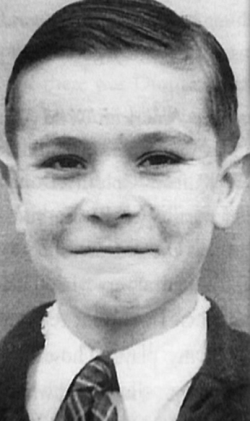
His mother, Marie Fugard, who was racially classified as ‘coloured’ owned a boarding house (Tekweni), a business she had to take on to support her family after Fugard’s Jazz pianist father got disabled and couldn’t work anymore.

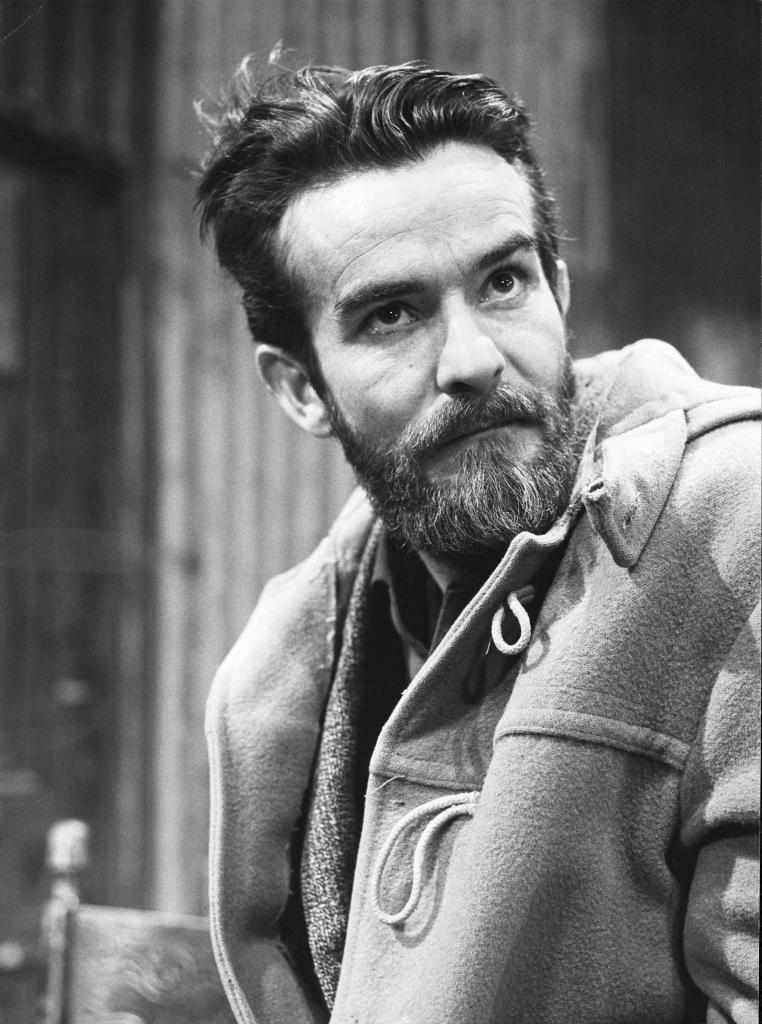
In the 1970s Fugard wrote some of his most politically charged works during this decade which provoked the South African government. Plays like Boesman and Lena (1970), The Island (1973) Statements After an Arrest Under the Mortality Act (1972) and Sizwe Banzi is Dead (1972) which he co-created with John Kani and Winston Ntshona. Many of his collaborators faced jail time but due to his race Fugard was never imprisoned but he was still a target for government prosecution and surveillance. Fugard wrote and produced over 30 plays through seven decades to great acclaim and remains one of the most revered playwrights in South African history.
Global Recognition and Impact
Blood Knot, written by Fugard in 1961, is one of his most daring plays that earned him wide recognition. It is regarded as part of his statement plays that cemented his political stance against the apartheid system. The play was first staged underground in 1961 in The Rehearsal Room of the Union of South African Artists in Johannesburg because it could not be staged publicly. The semi-autobiographical story borrows from Fugard’s own experience growing up in a racially mixed environment with a mother who was considered ‘Coloured’. He acted alongside Zakes Mokae as his half-brother who passes for white and pretends to be him when it’s time for Mokae to meet his pen pal girlfriend in person. Just like his relationships with Kani and Ntshona, Fugard and Mokae had a strong artistic and personal bond and worked closely on Blood Knot, a collaboration that led to Mokae’s arrest by the apartheid police and the confiscation of Fugard’s passport for four years. This in turn made Mokae more passionate about political theatre, though he would later leave South Africa to pursue his career abroad. He passed away in September 2009. With earlier versions directed by Fugard himself, Blood Knot was a career defining master piece that propelled both him and Mokae’s career on the global stage when it was staged at The Royal Court Theatre in London in 1964. The play later had its Broadway debut at the Lincoln Center in 1985 starring James Earl Jones and Harris Yulin.

Athol Fugard wrote Sizwe Banzi, a play which follows a black man who has traveled to find work but cannot because his passbook is invalid. He and a creative photographer come up with a solution which leads Sizwe assuming the identity of a dead man thus sacrificing his own identity. First written and performed in 1972 at the Space Theatre in Cape Town a multiracial venue that defied apartheid laws, the play was later staged at the Royal Court Theatre in London where it received rave reviews.
Kani and Ntshona alternated roles and both actors won the 1975 Tony award for Best Actor in a play which they shared. It was the first time Black South African actors won the award.

John Kani, Athol Fugard and Winston Ntshona were not only creative collaborators but close friends too who were part of The Serpent Players collective started by Fugard himself. Though he is often credited as the playwright, Fugard stated that the play was a collective collaboration with Kani and Ntshona that was developed through improvisation and was later transcribed from the performance. His collaborations with them were not only political but deeply personal and they risked arrests by ignoring the segregation laws and insisting on integrated rehearsals and performances. Fugard favoured two-handers in his theatrical pieces and Kani and Ntshona collaborated with him of other plays including The Island which was translated into more than 30 languages. Fugard considered the two men his brothers and they all maintained a lifelong friendship and mutual respect over the years. Winston Ntshona passed away in August 2018 and with Fugard’s passing this year, John Kani remains the last one standing from the revered brotherhood.

In 1982 Fugard directed his play, play ‘Master Harold’…and the Boys at the Lyceum theatre. It was the first play on Broadway by a white South African that critiqued apartheid. Set in the 1950s the semi-autobiographical play explores the complex relationship dynamics of a teenage white boy named Harold and his Black servants who treated him like family. It is one of the most impactful African plays to be staged on Broadway and it run for 344 shows. The play was nominated for the Tony award for best Direction and won the Tony Award of best play of 1982. Fugard went on to have five more plays of his staged on Broadway.

Danny Glover a rising actor on the American film and theatre scene at the time had a pivotal role in the play as Sam and Zakes Mokae, a longtime collaborator of Fugard put on an unforgettable performance as Willie and went on to win the Tony for best featured actor. The play was also a career defining role for the young white South African actor Lonny Price who acted as Hally (Harold).
‘Master Harold’…and the Boys adapted to the film in 1984 with the screenplay by Athol Fugard and later in 2010 under the direction of Lonny Price with Freddie Highmore as Hally.

During the height of his career, Fugard struggled with alcoholism which he always said was inevitable because he grew up with an alcoholic father. Due to his father’s disability and eventual unemployment, he began drinking and used a young Athol as an accomplice to help him sneak alcohol around. His father who was a great storyteller would then reward him with epic tales that transfixed Fugard’s young impressionable mind. When his drinking got worse he sought professional and he eventually stopped drinking alcohol in 1982.

The Post Apartheid Years and Beyond
Fugard wrote My Children! My Africa! one of his most impactful plays in 1989 during the late apartheid era. The playwright had stayed away from writing for close to a decade and this was his critique on the political atmosphere in South Africa. Set in 1984 in a segregated South African town, the play follows a Black teacher who organizes a debate between his black and white students. Fugard wrote the play as a response to the political unrest and violent student uprisings in 1980s South Africa. It was first staged in May 1989 at the Market Theatre in Johannesburg and was directed by Fugard himself. The play was later performed at the Lincoln Center in New York in late 1989. It was also shown at the Royal National Theatre in London. My Children! My Africa! Is still used in school curriculums in South Africa and other parts of the world to educate students on activism and ethics.
Video: The Resistance Theatre of Athol Fugard
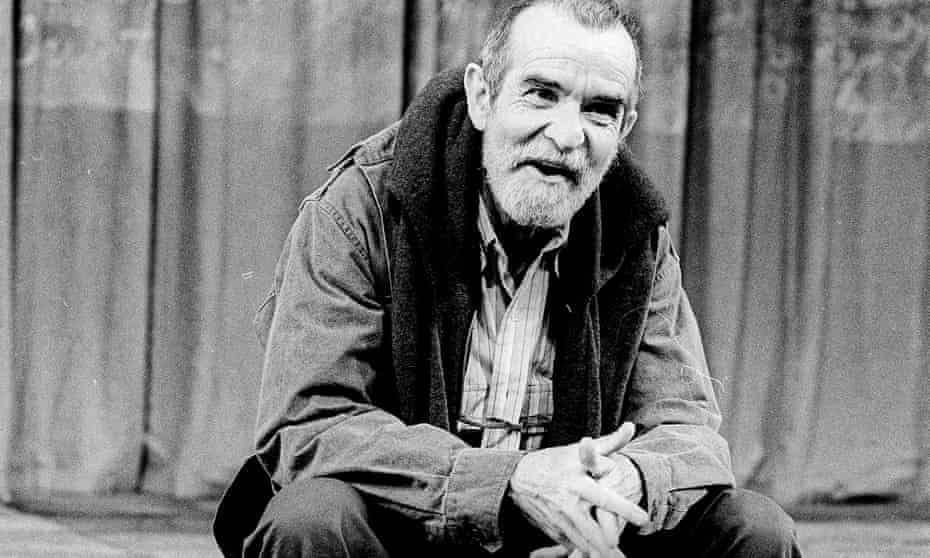
His work became even more urgent during this crucial time before the apartheid system would be officially abolished in South African history. Though victory over apartheid was looming, he focused more of reflective works that looked candidly at the damage that the segregation laws had done and how healing and reconciliation could be achieved. Plays like Valley Song (1995) which was his first play after apartheid ended dared to confront these harsh realities.

The playwright wrote The Captain’s Tiger in 1997. This was another one of his semi-autobiographical plays about a young writer forming his creative identity while traveling the world on a ship. In this play, Fugard reflects on his early years that shaped him as a storyteller. It is also one of the few plays of his that was not politically inclined and was more of an exploration of an artist’s creative journey and the discovery of one’s voice. It highlights the power of storytelling and the importance of searching for truth. The Captain’s Tiger first premiered at The Arena at the State Theatre in Pretoria. It was directed by Fugard and Susan Hilferty. The play was also later staged at the Manhattan Theatre Club in January 1999.

Legacy and Continued Relevance
Aside from his remarkable theatre career Fugard also achieved success in the world of film when some of his plays were adapted for the screen. Films like The Road to Mecca (2011) Boesman and Lena (1980), Mater Harold…and The Boys, (1884,2010) and The Guest (1977). He also acted in the films like Ghandi (1982), Killing Fields (1984), Marigolds In August (1980) and Meeting with Remarkable Men (1979). He wrote only one novel, Tsotsi, which was adapted into a film and won the Academy Award for Best Foreign Film.

Over his seven decade long career he made significant contributions to the Anti-Apartheid movement in South Africa and won many awards for his works, the Drama Desk Award, Order of Ikhamanga, Common Wealth Writers Prize for Africa, New York Drama Critics’ Circle Award and he was awarded Honorary degrees from Yale, Oxford and numerous universities in South Africa. He was also inducted into the American Theatre Hall of Fame. After a very long and successful career, he moved to California and worked at USCD as an adjunct professor where he taught for over a decade. He later moved back to South Africa where he lived out his later years quietly while writing and performing occasionally.

Fugard drew from his own life experiences throughout his lustrous career and used his privilege to denounce and confront the dehumanizing apartheid system. His powerful stories resonated with many audiences around the world and impacted generations of storytellers using their voices to fight back against injustice. He is survived by his ex-wife Sheila Meiring, his wife Paula Fourie and three children including playwright and actor Lisa Fugard.
Watch a tribute video about the playwright.



Discussion about this post