


Ben Binebai’s Dance of the Ghosts is a play that offers hope to the oppressed. Justice, it says, no matter how suppressed, must prevail. The truth, even if silenced, even if killed, must emerge. The ghosts will dance their truths, to the bewilderment of the ones who killed them to hide those same truths.
In the current socio-political reality of Nigeria, where it seems nobody can hold the powerful to account except through divine intervention, it is fitting that the trio of Chinenye Joseph, Cynthia Eze and Clinton Ukatu, all penultimate students of Theatre and Film Studies of the University of Nigeria, chose to direct Ben Binebai’s Dance of the Ghosts in fulfilment of their Directing course. On the 23rd of April, 2026, at the Arts Theatre of the same school, the play went on stage to close the Festival of Nine Plays that ran from 21st April to 23rd April, 2026.
Who Killed the Ghosts?
The people of Ebiogbo Kingdom were living in relative peace until dancing ghosts started appearing at communal and private gatherings, bringing calamities along with their presence. No one knows what might have been the cause, and what can be done to put an end to the disastrous appearances. This weighs heavily on King Ikeime (Nwafor Chinemerem), who is perpetually angry and seeks ways to douse the fire burning his kingdom. It is easy to mistake him at this point as a king who has his people’s affairs at heart, but we soon learn that he is a tyrant when he starts ordering the execution of cabinet members whose suggestions he dislikes. “Women carrying the face of men,” he calls them when they suggest caution is applied in sending human warriors to fight spiritual battles. Women carrying the faces of men, he executes, added to the ones he killed on his way to the throne.
See also: Who Wants to Dance With Death?: Ambition and Obligation in This Season’s Harvest
As he seeks solutions, we are introduced to the Queen (Ezeugwu Favour), who is equally concerned about the sordid affairs of the kingdom, and together they try different strategies of restoring peace and calm to the kingdom. Their consultation with the Native Doctor (Clinton Ukatu) yields almost nothing, for that which they seek to remove is internal and not external. The market bubbles despite these disturbances in the kingdom, with the normal hustle and bustle of buying, selling, stealing and running when the ghosts make their appearances. Who are these ghosts, everyone asks, and what is it they seek?
By the time the answer came, it had become apparent that the question should not be about the identity of the ghosts but about who made them ghosts. The ghosts are those of people unjustly murdered in the land, on the orders of the tyrant who rules the community, and their unfortunate dance can only end with the removal of the tyrant.
A Terrific Production
Joseph, Eze and Ukatu have proved themselves to be true directors. They understood the script they were working with and knew how to execute its mission. The lesson was clear: evil doing has its consequences, no matter how hidden; it is not erased by silence, and the memory must always be alive. Joseph Orakwe, in lighting, also catches the fire, pun intended. Throughout the production, he utilised darkness and dimness to depict the damnation of the haunted. When everywhere was dark or dim, and the ghosts dressed, zombie-like, with the costume of Ann Obiekwugo and makeup of Sasha Attah and Ayogu Patience and danced, zombie-like also, to the live chorus of Favour Ezeugwu and Favour Ajah and haunted sounds from Gift Ubah, the audience is in no doubt about what is happening; it is clear, the doom that has fallen upon this kingdom.
See also: Ku kyooto Rekindles the Fire of Legacy at the Uganda National Theatre
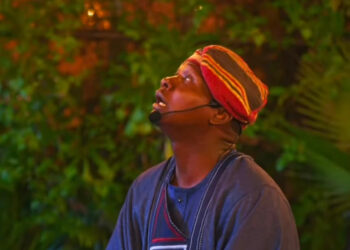
The cast, however, refused to be outdone by the crew and delivered such a stellar performance that an audience member seated next to me, who had followed the festival from the beginning remarked, “They left the best for the last.” From the carriage of Nwafor Chinemerem, whose stage movements, facial expressions, and speech carried in itself that anger and vehemence and wickedness of a tyrant; the choreography of the ghosts who give a sad dance performance in their first appearance and a ghostly victory dance at the end; to the chatter and drama of the market women, there was no shortage of outstanding performance from these actors and actresses.
Ezeugwu Favour, as Queen, gave yet another remarkable performance. She started strong and ended even stronger. At that point, she was possessed by one of the ghosts, giving her access to hidden truths about the king, her husband, truths which she so powerfully proclaimed to all gathered at the palace. Her face was visibly stricken, revealing an actress in full command of the spectrum of human emotions and the facial expressions that accompany them. At that exact moment, she dominated the stage with every other character and activity fading into the background of her presence. Her performance was so realistic at that point, I half-jokingly told a fellow audience member we may need the services of an exorcist when the lights are off, and the curtains are drawn.
When I think of unforgettable performances from the production, Ajah Favour’s performance as the Pant Seller immediately comes to mind. Although it was a minor role, her performance was anything but. The few seconds she spent on stage in the market scene made it memorable, delivering a comedic swerve that could neither be dodged nor resisted. We laughed, not because she made any extra effort at being funny, but because she was funny. This is evident in the way she marketed her wares, sought out customers, and even in how she reacted to the thief (Obeta Amarachi) who had tampered with her wares. And we cannot forget Richard Egwuje, the propsmaster whose choice of the size of underwear Ajah sells helps make the scene a rib-cracking one.
See also: The Wasp, Ndayola Ulenga and Her Directing Award
Another scene that gently insists on not being forgotten is the scene where King Ikeime refers to his chiefs as “women carrying the face of men.” One immediately noticed that the chief who had provoked that comment was indeed a woman carrying the face of a man, a lady dressed and made up to play the character of a male chief. I do not know whether the use of that line at that moment is an intentional choice from the directors, but the comedic value of the (possibly intentional) coincidence remained, and maybe even overshadowed its sexist import.
Conclusion
Whether it is true that every evil doer gets to suffer the consequences of their evil deeds is debatable. In fact, it may even be termed a childish delusion, and one may find in this delusion a partial explanation for the belief, not just in the afterlife, but in the punishment that realm holds for the offenders, man’s way of sustaining this belief that no evil deed goes unpunished, even if the evil doer lives their full life on earth without any consequences. What is not debatable, though, is that the directors of this production of Ben Binebai’s Dance of the Ghosts, Chinenye Joseph, Cynthia Eze and Clinton Ukatu did pay attention to their directing lecturers. One can only look forward to what their emergence will mean for theatre and film in the future. If I were a betting man, I would strongly wager that the odds are in their favour.




Discussion about this post