


The history of theatre and performance around the world is becoming more fragile in this fast-developing digital era. Theatre history risks being lost to fading photographs, forgotten programmes and personal archives. We live in a time where content is becoming more digitalized but cultural memory remains fragile and the question of who preserves theatre history and how they preserve it has never been more pressing.
In Uganda, this question was recently addressed through a photography exhibition titled On Stage, Playing? which was hosted by the Uganda National Theatre in partnership with History In Press in August this year. The exhibition arrived as a timely intervention which did more than display images but also it asked the necessary question: what happens to a nation’s performance memory when it is not deliberately preserved?
On Stage, Playing? was curated through the digitisation of old theatre photographs which consisted of production stills, behind-the-scenes moments, and snapshots of a once-vibrant theatre era in Uganda. The exhibition rescued fragile images from drawers, albums, and forgotten archives, and brought them into dialogue with today’s theatre artists and audiences. By inviting audiences to time travel through a rare visual record of Uganda’s theatrical past On Stage, Playing? positioned archiving not as nostalgia, but as an urgent act of cultural survival. It offered more than just an exhibition and proposed a model for how Uganda can safeguard her artistic legacy for future generations.
See also: Troupe Jeannette: Un patrimoine culturel vivant

At the heart of this initiative are Dutch photographer and researcher, Andrea Stultiens and Ugandan artist and photographer Canon Griffin, who are co-founders of History In Progress Uganda. Andrea has spent more than a decade digitising, cataloguing, and reimagining photographic collections related to Uganda’s cultural history and Canon has been his constant collaborator on ground.
“We do both the archiving and activation of the archive artistically,” Andrea explained. In the exhibition, this activation took shape as collages, one set by Griffin, another by Andrea herself—literally stitching together fragments of Uganda’s theatre history into larger symbolic pictures of plays, rehearsals, and behind-the-scenes life.
For Andrea, this work began out of curiosity. When she first visited Uganda in the early 2000s, she was struck by cultural diversity and the gaps in her understanding. “I didn’t want to just take pictures as an outsider. I wanted to understand what I didn’t understand,” she said. That curiosity led her to archival materials, elders like Kaddu Wasswa, and eventually to the albums tucked away at the National Theatre.
See also: Performing for Western Validation: Abuchi Modilim’s The Brigadiers of A Mad Tribe
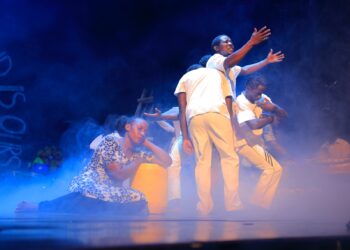
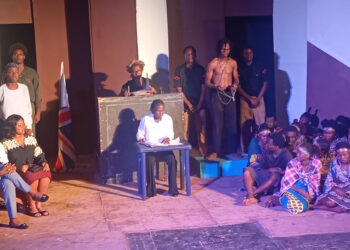
The photographs and collages that lined the walls of the National Theatre were time capsules of productions, meetings and events from the past. Many of the images were of actors on stage during different performances and rehearsals. These ranged from school plays by students from Namasagali, King’s College, Buddo to productions with professional actors from various theatre groups. Many of the most revered actors and directors in Ugandan film and theatre today got their big break on the National Theatre stage and it is incredible to witness their humble beginnings through these photographs. Actors like Michael Wawuyo Snr., Phillip Luswata, Annet Nandujja and Asiimwe Deborah Kawe can be spotted as young artists in these nostalgic images.

Andrea also worked closely with Maureen Mutonyi, Heritage Officer at UNCC, who has been working at the theatre for nearly two decades across various departments and was instrumental in turning the idea of an exhibition into reality.
“I had always wanted to do a photo exhibition,” she said. “We have a rich archive, but most of the photos were not curated. Some events we cannot explain. But they show the National Theatre—the stage, the place, where we’ve been. I thought, “Let’s put the photographs up and let the public help us fill in the stories.”
This vision birthed the yearlong collaboration with HIPUganda and it resulted in the participatory exhibition. The visitors were encouraged to contribute any information they knew about the photographs in the photo books that were displayed. They named faces, productions, years and filled in other missing pieces which made the process even more engaging and exciting.
See also: Lize Ehlers: Namibia’s Creative Powerhouse
“Our target audience was mainly artists who have been on stage,” Maureen noted. “Some of them are much younger in the photographs. We even had staff who worked here in the 70s recognising themselves. It’s inspiring.” she added.

Drawing over 70 participants, the exhibition was launched with a symposium where discussions were held about the photographs, the history of Ugandan theatre and the legacies both colonial and indigenous that shaped Ugandan performance traditions. a Multi-media visual artist Nuwa Wamala Nnyanzi, a seasoned artist and patron of the arts, reminded today’s theater practitioners about the importance of documenting their own work so that future generations won’t have to reconstruct it from fragments.
For Maureen, this ties into a larger mandate. As the Theatre’s first Heritage Officer, this was more than archiving for her. It is also cultural preservation. “I love heritage,” she said passionately. “Because I was the first person in that office, I’ve had the freedom to build and grow the department. I travel to different parts of the country to collect items to add to the museum. The goal is to represent each tribe in the country and preserve their identities for current and future generations.’ she added.
In Uganda, theatre has been a huge contributor to the country’s cultural, political and social landscape. Yet without deliberate archiving, that history risks fading. Exhibitions like On Stage, Playing?, create a bridge between past and present; inviting both theatre artists and lovers to preserve these events through recording and reflection.
The UNCC and HIPUganda will continue this collaboration and make it accessible to the wider public both physically and online. On Stage, Playing? isn’t just about curating images of past productions—it’s also about curating the very act of memory and how a nation remembers itself.



Discussion about this post