


Every December, as the Kampala air fills with palpable anticipation for the Christmas holidays, many families and friends prepare for the annual Watoto Christmas Cantata, one of the most cherished Christian holiday traditions in the city.
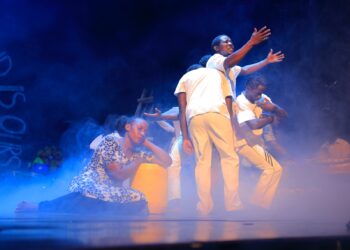
For the first time, this year’s production, Son Of God will be staged outdoors at Old Kampala Senior Secondary School to accommodate the growing numbers. This year’s cantata celebrations will happen over a period of five days with over a thousand talented performers and crew members from the 18 Watoto Campuses and gospel artists and choirs from across the country.
For over four decades, Watoto Church has hosted hundreds of believers at the main Watoto Downtown campus, captivating the hearts of audiences of all ages through their spectacular retelling of Jesus’ conception and birth. This year’s production aims to welcome an even bigger community of Christians into a shared experience of celebrating the birth of Christ through music, dance and drama.
Like elsewhere in the world, theatre and religion share a deep and complex history in Uganda. Long before the arrival of Christianity and Islam, storytelling thrived in royal courts, clan gatherings, divination rituals, and other communal ceremonies. Whether through dance, drumming, masquerade, or oral narrative, performance was inseparable from spirituality. Cultural performances and spiritual practices like the ba Lubaale among the Baganda, Bwola among the Acoli, Banyankole’s Ekitagururo, and Basoga’s Nalufuka ceremonies were all forms of theatre rooted in memory, moral and spiritual teachings.
See also: Performing for Western Validation: Abuchi Modilim’s The Brigadiers of A Mad Tribe
Storytelling was a big part of the spiritual livelihood of the people and carried sacred rituals, preserved oral traditions, and brought people together in communal reflection. These vibrant traditions would later form the backbone of religious theatre in Uganda, evolving through the colonial period, missionary work, and modern performance culture.

Missionary Arrival
When Christian missionaries arrived in Uganda in the late 19th century they quickly realised that theatre could evangelise more effectively than sermons alone. The Mission schools then introduced didactic theatre as early as the 1910s and 1920s, blending biblical stories with local performance forms which were performed by students. Passion Plays were performed in schools like Namilyango College, Gayaza High School, St. Mary’s Namagunga, Kisubi, Budo, and Rubaga Girls. The missionaries used these dramas to teach Christian morals and to instill discipline, and literacy.
During this period, there was a rise of morality plays, influenced by European catechism theatre, many of which were adapted into local languages. By the 1930s, annual pageants became a tradition in churches and schools. Nativity re-enactments were held and they often incorporated local costumes and drums. Passion Plays around Easter and musical dramas to celebrate the birth of Christ were staged.
Post Independence Theatre
After Uganda got her independence in 1962, theatre became more localiszed and diverse. Church-Based Theatre flourished and church groups produced original Ugandan Christian dramas which often blended scripture with social issues like domestic violence, corruption, youth challenges and moral dilemmas. By the 1980s and 90s, church drama groups such as those in KPC (now Watoto), Namirembe Youth, Mbarara Diocese, and the early Rubaga youth groups were performing full-length plays that became a big part of the church community and people in neighbouring areas.
See also: On Stage, Playing?: Preserving Uganda’s Theatre Memory
In the 2000s, there was a take over of evangelical productions that brought about large scale Christian stage productions which used spectacle, lighting, and contemporary acting to depict salvation themes. Charismatic churches like Watoto, Miracle Centre and Victory Church have consistently staged Christmas productions commonly known as ‘cantatas’ for over 20 years and they continue to draw crowds to this day. Over the years more churches have adapted the concept of grand christmas plays that church goers and people looking for holiday entertainment with their families look forward to.
The Pentecostal Theatre of Heaven’s Gates and Hell’s Flames
These performances have continued for over 80 years, becoming some of Uganda’s most consistent theatre traditions. Today, churches like Watoto, Miracle Centre, Rubaga Cathedral, Namirembe Cathedral, and Victory City still stage large Christmas productions, merging African dance, lighting design, and modern theatre technology.
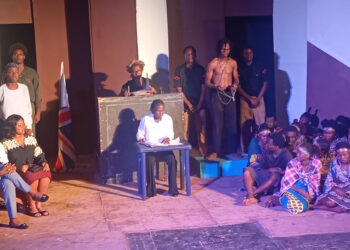
In May this year, I got the opportunity to see a play Heaven’s Gates and Hell’s Flames at Watoto Church in Kampala. It is a classic gospel drama depicting the eternal consequences of earthly choices and an emotionally charged presentation of heaven’s joy and hell’s torment. The play used to be staged every four years but had been on a thirteen year hiatus since 2012. I had last watched the production in high school, and I was eager to see it again as an adult.
Originally written by Bruce and Ruth Thum along with the Sunshine Evangelistic Association team in the early 1950s, the play is a gospel drama that unfolds as a series of vignettes where people faced with sudden death must go before the angel with the book of life to determine whether they would go to heaven and meet Jesus or be sentenced to eternal damnation in Lucifer’s hell. The production which was first staged in Kampala in the early 90s was aimed to create both an entertainment and spiritual impact with the Watoto leaders hoping to convert thousands of people across the 28 performances.
See also: Miangaly Theatre Company: Defining the Stage in Madagascar

When I first watched this play back in school, I was captivated by the quality of the production where Jesus, heaven and the angels sparkled on stage. I was simultaneously horrified by the sight of the devil, his demons and the blazing hell fire. Each time someone died I held my breath and prayed that their name was in the book of life. I beamed with joy whenever Jesus came down the golden stairs to meet the person he was going to spend eternity with, and I buried my head in my hands when someone was sent to hell, and the devil’s agents came to take them away amidst agonising screams. By the time the play was done, I was among the hundreds of the audience members that ran up to the front of the church to give their lives to Christ and avoid burning in hell forever.
Adult Skepticism
After the show in May, the usual call to accept Christ as a personal Savior was made and people from the audience rushed to the front to get saved. I saw both young and old people wholeheartedly surrender to this moment of redemption and I was reminded of my own experience when I ran up to the stage as a teenager so desperate to be saved from hell fire.
However, as an adult I realised that I wouldn’t run up there for that reason, especially because I now understand that there is a lot more nuance when it comes to being a good or a bad person. I came to see the play out of curiosity, but I wish I had kept my childhood memories intact because I found that the way the story was told felt more manipulative than inspiring for one to give their life to Christ.
Simeon Lakuc, the line producer of Heaven’s Gates and Hell’s Flames admits that the play is a bit too on the nose but says that it is necessary because its primary target is non-believers and not people who are already in the church.
“Those of us who are already in church know the message comes off a bit too strong but that is the best way to get non-believers to come and give their lives to Christ. The play shouldn’t be taken too literally but the way it is showcased has proved to work every time and more people get saved,” he believes.
See also: Bwanika Sseremba’s Come Good Rain Finally Comes to Uganda
An actor, dancer and singer as well, Simeon has been performing in Watoto church since he was 12 years old. “The church gave me a platform to perform where I started out doing ballet and later started acting and singing. I credit being the performer I am now to my early start performing on the church stage” he adds. Simeon has graced other stages outside of church including productions like Merchant of Venice and My Fair Lady. He is also an assistant director with hopes of becoming a director someday soon.
When I asked him about why the script of Heaven’s Gates and Hell’s Flames has not changed after all these decades he responded that; “due to copyright restrictions by the original creators of the play, it cannot be fully adapted to make it more Ugandan save for a few things.” He believes that if the church hired new or and local writers to write the scripts, the stories would be much more relatable.

‘I hope that we will be able to do everything by ourselves in the near future but, unfortunately, theatre evolves at a slow pace and Christian theatre evolves even slower”. He concluded.
Islamic Theatre?
Unlike Christianity where theatre is deeply embedded in the church culture, Islam’s relationship with the art form has always been a bit more ambivalent. Though Islam reached Uganda earlier than Christianity (as early as the mid-1800s through trade routes), its relationship with theatre has always been more nuanced. Many Islamic traditions historically discouraged performance arts that involved imitation of humans, instrumental music, or mixed-gender performance and drinking of alcohol which are viewed as a taboo commonly referred to as haram.
Yet performance persisted in Ugandan Muslim communities by taking on different forms some of which include Sung Poetry (Kasida / Qasida) which is performed in mosques and community gatherings. These poetic recitations told stories of prophets and moral lessons.Though they are not “drama” in the Western sense, they were/are performative and narrative-driven.
There were also cultural ceremonies called Mwesto and Biina which often integrated theatrical elements, narrative songs, comedic skits and disguises. Through the 1970s and 1990s local Muslim groups continued to use short skits during Ramadan events and youth gatherings to teach honesty, modesty, social responsibility and Islamic ethics.
See also: Translating the Act: Kenyan Producers Keeping Indigenous Languages in Auditoriums
Today, there are more Muslims who are finding alternative ways to express themselves through theatre and are putting on productions that honour both their faith and their artistic expression. In June this year, an Islamic play Ndabirwamu (Mirror), designed for the Muslim audience was staged at the Uganda National Theatre. It was written by Muhammed Magoola who worked with Muslim performers including Wasswa Abdalllah, Kato Abdallah, Shamim Mayanja and Collin Hamim Kulubya. The play aimed to create awareness about living life according to Allah’s will and staying away from bad influences.
“We wanted to stage a play that is specifically for a Muslim audience because those are very rare. We want to change the misconception that Muslims cannot be in entertainment. We can do it and still honor Allah”, expressed Wasswa.
Collin Hamim Kulubya; a Muslim convert focused on spreading the word of God through performance, further expounds that they started out on TikTok where they still write, act and film their own skits. They ventured into theatre for a more physical exposure of their art and now are planning to produce a Muslim TV show.
Rashida Namulondo is another Muslim Ugandan playwright, poet and actress who is embracing her Islamic faith in her artistry. For many years Rashida was okay with putting her work as an artist before her faith but that changed over time when she found herself compromising more than she intended just so she could secure certain roles. Most of the challenges she faced came from the lack of consideration and inclusivity for her as a Muslim performer especially during Ramadhan when she was expected to forgo prayers or forced to work longer hours when fasting.
“I have been on productions where I never felt considered because I was usually the only practicing Muslim on set, especially during Ramadhan. I couldn’t step away to pray or even break my fast when it was time. I was often labeled difficult or unreliable when I chose to honour my beliefs” she confided.
See also: Zimbabwe’s Jasen Mphepo Little Theatre Serving a Big Purpose
“I found myself in uncomfortable situations where I was on posters for shows that were being sponsored by alcohol brands. The people I was working with did not understand why this was a problem for me and I got to a point where I had to choose between being a Muslim and an actor and I chose being a Muslim” Rashida adds.
Rashida found herself writing more because she wanted to tell stories that did not compromise her values. She mostly writes on women and has had to take on more behind the scenes roles like producing and doing administrative work.
“Not many people write roles for Muslims so I had to do something about it. Muslims are not portrayed well in entertainment and they are stereotyped all the time. We only ever see Hajjis with many wives yet there are Muslims who intentionally have nuclear families”. She observed.
Apart from creating more inclusive Islamic plays, Rashida also now works with the Sophie Muwanika Institute of Art for Change, a theatre organisation that educates communities on social issues through performance art. They create interactive plays which educate people and enable them to question their beliefs about one another. One of their most recent plays, Our Voices was developed with women in Bugiri district and it brought Muslims and Christians together in dialogue to address their biases.The organisation hopes to bring about more understanding and empathy among the people with different beliefs in the communities.

Besides theatremakers like Wasswa and Namulondo, there are other contemporary playwrights, actors, and academics and Muslim scholars and lecturers like Dr. Masiira Lwanga and Prof. Abaasi Kiyimba whose work in teaching storytelling and Islam at Makerere’s theatre department have helped open dialogue on theatre as a tool of da’awah, community healing, and cultural expression.
See also: Wassanyi Sserukenya lived a full life
Conclusion
This holiday season, there are a variety of Christmas shows being staged in Kampala and across the country. Shows like Watoto’s Christmas Canta Son of God, Perfect Wait by St. Mark’s College Namagoma and Christmas Carols in different churches are some to watch out for.
Though Christian productions have monopolised Uganda’s religious theatre, there are indigenous spiritual performances that were still in existence even after missionary dominance. Cultural groups like Ndere Troupe revived spiritual theatre through their traditional performances. There was also a rise of African theater festival performances which were ritual based and explored various traditional spirit possession ceremonies like Omanjira and Acholi jok narratives which have been staged at Makerere University. These performances challenge the idea that theatre belongs only to imported religions and they instead highlight that Uganda has always had sacred theatre, long before colonialism.
From missionary morality plays to Islamic sung poetry, from traditional ceremonies to contemporary mega-productions, Uganda’s religious theatre is a living archive and a testament to how performance continues to shape belief, identity, and community. With each Christmas season when churches stage their vibrant cantatas and carols, when communities gather for morality plays, and when theatre stages host religious-themed and cultural productions the tradition continues, upholding decades of creativity, devotion, and storytelling.



Discussion about this post